When you're planning a new home, home addition, or major renovation, there are hundreds of decisions to make.
Floor plans. Kitchen layouts. Flooring. Windows. Lighting. Finishes.
But one of the most important decisions affecting how you experience your home every day is often one you never see once construction is complete.
Your HVAC design.
While an HVAC design may initially be required as part of your building permit application, its purpose extends far beyond obtaining permit approval.
The decisions made during the design stage can influence your home's comfort, energy consumption, operating costs, and overall system performance for decades.
Your building permit is temporary. You live with your home's comfort every day.
Key Takeaways
- ✓HVAC design decisions can influence your home's comfort for decades.
- ✓Home comfort involves much more than maintaining a temperature at the thermostat.
- ✓Equipment selection, airflow, and duct design all contribute to long-term system performance.
- ✓Addressing potential comfort challenges during the design stage can help avoid costly modifications after construction.
- ✓Professional HVAC design is an investment in how you experience your home.
What Does Home Comfort Really Mean?
When most people think about home comfort, they think about the temperature displayed on their thermostat.
But true home comfort involves much more.
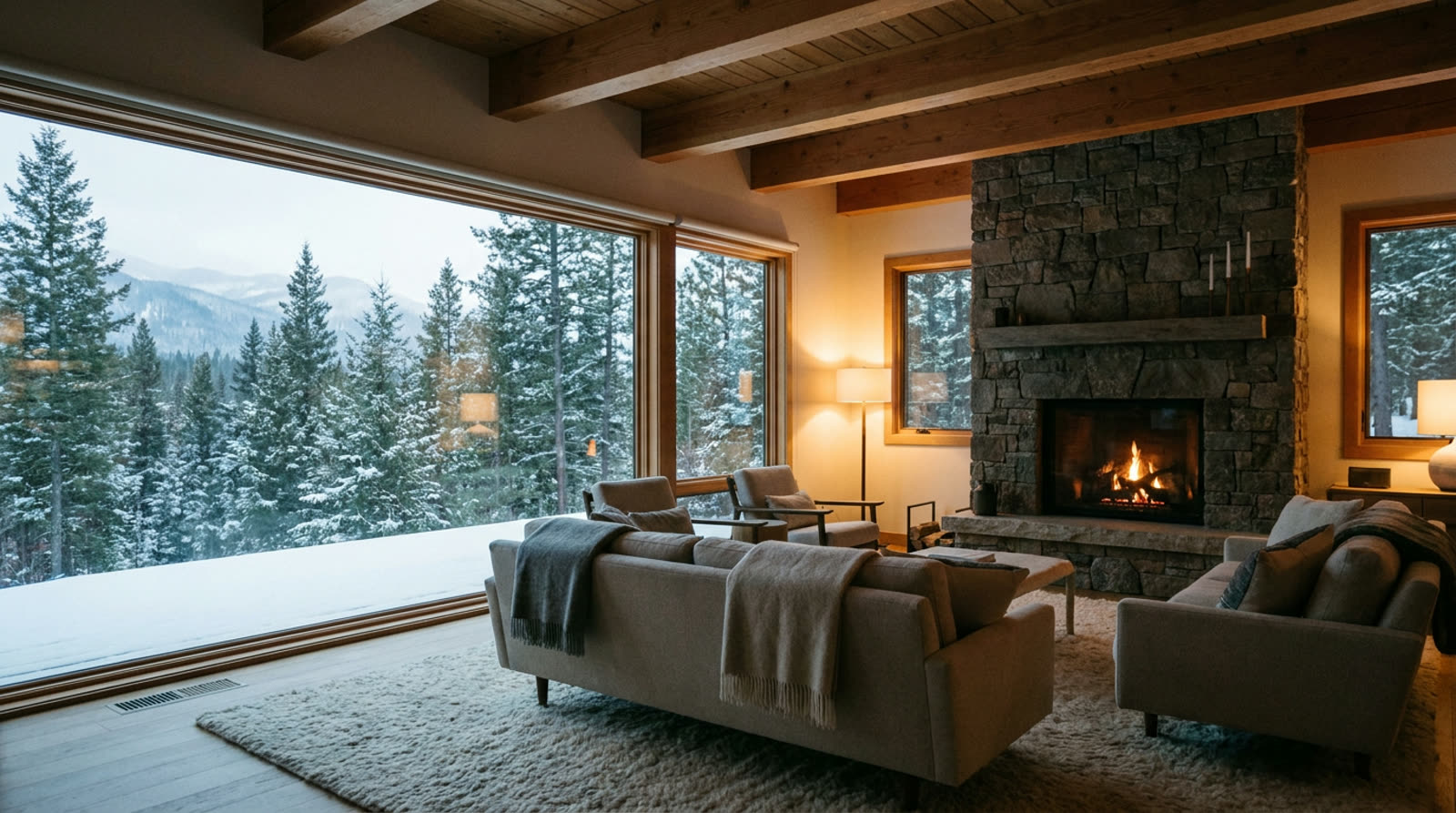
- It's enjoying your morning coffee beside a large window on a cold January morning.
- It's sleeping comfortably in an upstairs bedroom during a July heat wave.
- It's enjoying your finished basement without constantly reaching for an extra sweater.
- It's working in your home office without needing a portable heater or fan.
Home comfort is influenced by several factors, including:
- Consistent indoor temperatures
- Proper air distribution
- Indoor humidity levels
- Ventilation and indoor air quality
- System noise
- Temperature differences between rooms and floors
A professionally designed HVAC system considers these factors, along with the home's heating and cooling requirements.
Comfort Begins Before Construction
Many homeowners don't think about how their HVAC system will perform until they move into their new home.
By that point, however, many important design decisions have already been made.
- The walls are finished.
- The ceilings are closed.
- The ductwork is concealed.
- The equipment is installed.
Making significant changes to the HVAC system at this stage can be considerably more complicated than addressing those same considerations during the planning and design process.
Professional HVAC design lets you evaluate the home's requirements while still incorporating changes into the construction plans.
This is one reason HVAC design should be an integral part of planning a home—not simply another item on the building permit checklist.
Related reading: Where Does HVAC Design Fit in the Building Permit Process?
Five HVAC Design Decisions That Influence Long-Term Comfort
Understanding the Home's Heating and Cooling Requirements
Every home gains and loses heat differently.
Window placement, insulation levels, ceiling heights, building orientation, and construction materials all influence how much heating and cooling a home requires.
Detailed heat loss and heat gain calculations provide the foundation for understanding these requirements.
Without this information, important design decisions may be based on assumptions rather than the home's actual characteristics.
Selecting Appropriate HVAC Equipment
The equipment should be selected to meet the home's calculated heating and cooling requirements.
Significantly oversized or undersized equipment can contribute to comfort challenges, inefficient operation, and unnecessary wear.
Professional equipment selection considers how the system will perform under different operating conditions throughout the year.
Related reading: Why HVAC System Selection Should Follow Calculations
Delivering the Right Amount of Air to Each Room
Your home doesn't experience heating and cooling as one large, uniform space.
A south-facing living room may have very different cooling requirements than a north-facing bedroom.
An upstairs bedroom may have different heating requirements than a finished basement.
Room-by-room calculations help determine each space's heating and cooling needs, providing the foundation for appropriate air distribution.
Related reading: Why Room-by-Room Calculations Matter
Designing an Effective Air Distribution System
In a forced-air HVAC system, selecting the right equipment is only part of the solution.
The ductwork must also be designed to deliver the required airflow throughout the home.
Duct sizing, routing, supply register locations, return air pathways, and available system pressure all influence how effectively conditioned air reaches each space.
Even high-quality HVAC equipment can struggle to provide comfortable indoor conditions when the air distribution system is poorly designed.
Coordinating the HVAC Design With the Home
A well-designed HVAC system must work within the architectural and structural features of the home.
Early coordination helps identify potential challenges involving:
- Mechanical equipment locations
- Ductwork routing
- Floor and ceiling assemblies
- Structural beams
- Mechanical room requirements
- Maintenance and service access
Addressing these considerations before construction can help reduce compromises during installation.
The Equipment May Change, but the Design Can Remain
Over the lifetime of your home, your furnace, air conditioner, or heat pump may eventually need replacing.
However, many components of the original HVAC design may remain in place for much longer.
Ductwork concealed within walls, floors, and ceilings can remain part of the home through multiple equipment replacement cycles.
This means the decisions made during the original design stage can continue to influence system performance long after the original equipment has been replaced.
Installing newer or more expensive equipment doesn't automatically resolve underlying air distribution problems.
A thoughtfully designed HVAC system provides a stronger foundation for current and future equipment, though you should always evaluate compatibility when upgrading.
When Comfort Problems Become Everyday Problems
Imagine moving into your newly constructed home.
Everything looks exactly as you imagined.
But as the seasons change, you begin to notice a few things.
- The primary bedroom is too warm in the summer.
- The room above the garage feels cold in the winter.
- The finished basement never seems to reach a comfortable temperature.
- The HVAC system runs frequently, but some rooms still don't feel right.
Individually, these issues may seem minor.
Over months and years, however, they can become a frustrating part of everyday life.
While comfort problems can result from several factors, including installation quality, building construction, maintenance, and system operation, professional HVAC design helps address many potential challenges before construction begins.
The Long-Term Financial Value of Professional HVAC Design
The initial cost of an HVAC design represents only one part of the overall investment in your home's heating and cooling system.
Over the years, homeowners will also encounter costs associated with:
- Heating and cooling energy consumption
- Routine maintenance
- Equipment repairs
- Equipment replacement
- Potential system modifications
A properly designed, installed, and maintained HVAC system can help support efficient operation and reduce the likelihood of avoidable performance problems.
Professional HVAC design should therefore be viewed not only in terms of its initial cost, but also in terms of the long-term value it can provide.
Did You Know?
Your thermostat measures the temperature in its immediate surroundings—not the temperature in every room of your home.
Your thermostat may indicate 22°C while an upstairs bedroom feels noticeably warmer or a basement recreation room feels considerably cooler.
That is why hitting the thermostat setting doesn't always mean the whole home feels comfortable.
Proper equipment selection and air distribution are essential considerations when designing for comfort throughout the home.
From the Designer's Desk
When you're building a home, it's easy to focus on the things you'll see when construction is finished.
The kitchen you've always wanted. The beautiful flooring. The large windows overlooking your backyard.
But some of the most important features of your home will be hidden behind the walls and ceilings.
You'll rarely think about your ductwork when your home is comfortable. You'll enjoy spending time in each room.
That's what makes HVAC design such an important part of the planning process.
We're not just preparing drawings for a building permit. We're considering how your family will experience your home through cold Ontario winters, hot summer afternoons, and all the seasons in between.
The drawings may eventually be filed away, but the decisions behind them can influence your everyday comfort for years to come.
Frequently Asked Questions
Does HVAC design really affect long-term home comfort?
Yes. HVAC design establishes the foundation for equipment selection, airflow requirements, and air distribution. These decisions can influence how comfortably and efficiently the home performs throughout the year.
Can a new HVAC system still have comfort problems?
Yes. New equipment alone does not guarantee balanced comfort. Equipment sizing, duct design, installation quality, building construction, and system operation all contribute to overall performance.
Will replacing my HVAC equipment fix uneven temperatures?
Not necessarily. Uneven temperatures may be related to air distribution, ductwork, insulation, air leakage, or other factors. Identifying the underlying cause matters before choosing a solution.
Can HVAC design reduce my energy bills?
A properly designed HVAC system can operate efficiently. However, actual energy consumption also depends on equipment efficiency, building construction, weather conditions, maintenance, and homeowner usage.
Does professional HVAC design guarantee 20 years of comfort?
No. Long-term comfort depends on several factors, including design, installation, maintenance, equipment condition, and home changes. Professional design provides a well-planned foundation that can benefit the home for decades.
When should I start thinking about long-term HVAC performance?
During the planning and design stage of your new home, addition, or renovation. Early consideration provides more flexibility to coordinate the HVAC system with the architectural and structural features of your home.
Final Thoughts
Building or renovating a home is about more than creating a beautiful space.
It's about creating a place where you and your family can live comfortably for years to come.
While your HVAC design may start as a requirement for your building permit, its true value extends well beyond construction.
At Red Seal HVAC Designs, we believe professional HVAC design should consider not only what is required to build your home, but also how you will experience it once construction is complete.
By combining detailed calculations, thoughtful equipment selection, and coordinated system design, we help establish the foundation for long-term comfort and performance.
Design for the home you're building today—and the life you'll live in it tomorrow.
Continue Your Learning
Home Comfort & System Performance
- How Your HVAC Design Affects 20+ Years of Comfort (You are here)
- Bigger HVAC Equipment Isn't Always Better
- Not Every Home Needs the Same HVAC System
- The Cost of Guesswork in HVAC Design
- How Design Supports Energy Efficiency and Airflow
- Fresh Air, Humidity, and the Role of an HRV
Build With Confidence
Informed homeowners make better decisions
At Red Seal HVAC Designs, we believe informed homeowners make better decisions.
That's why we've created the Red Seal Learning Centre—to help you understand HVAC design, the building permit process, and the decisions that contribute to a comfortable, efficient home.
Whether you're planning a new home, an addition, or a major renovation, considering your HVAC requirements early can help you build with greater confidence.
If you have questions about your project or would like to learn more about professional HVAC design, we're here to help.